Splunk Highlights Observability for AI Agents


 Anjali Chauhan
 11 Sep 2025
As more organizations are choosing to author agentic AI solutions, monitoring the agents the organizations are deploying is becoming essential to business viability, says Mimi Shalash, Observability Advisor at Splunk, a Cisco company. Before the onset of AI, the observability of observability mainly consisted of manual human checks as to the performance and reliability of systems, particularly complicated systems with many moving parts and distance between items to monitor observable behaviour. The observation of observability is a lesson to be learned now that AI agents are on the table, and the focus is on how we understand the behaviour of observability as illustrated by new AI solutions, if we can predict when something goes wrong or breaks across our systems, so it doesn't affect the users?
Observability in an agentic AI world
Shalash notes how today's observability options have evolved from before. When a mobile app has issues with performance, like a slow experience or spikes in resource usage, the old reality involved checking some dashboards to determine what the cause was, be it the network, infrastructure, a payment solution, or having unoptimized images. This troubleshooting process would often take 45 minutes and sometimes longer before going to other dashboards to narrow down the issue (sometimes all this is entailed in less than 5 minutes). Now, with telemetry analysis from AI systems, developers or site reliability engineers can tell and resolve any problem or issues before their users may start "rage-clicking."
Understanding observability for agentic AI workflow can become complicated when companies are adopting large language models (LLMs) together with their agentic AI solutions, especially if the company is applying or sustaining the LLM, body of work, or external systems. Understanding observability as a whole means understanding and monitoring every aspect of the agentic AI ecosystem, including the interactions between AI agents, LLMs, and other tools or applications, which falls under the telemetry banner of metrics, events, logs, and traces (MELT data).
Splunk Solutions for Agentic AI
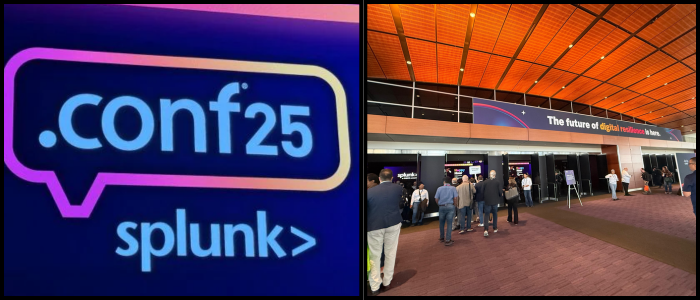
While attending the Splunk conference in Boston, the company announced new features that would ultimately embed agentic AI workflows in Splunk Observability Cloud and Splunk AppDynamics, releasing agentic AI capabilities which will observe and analyzing telemetry data for anomalies in real time, analyze any patterns, root cause any issues, and make recommendations for mitigating any observed anomalies.
Shalash cautions that if you don't observe, it is easy to make significant mistakes, especially as part of your AI, without realizing it. She described a financial organization that automated many of its reporting applications to find ROI where they ran into significant overages due to overuse of resource utilization in seven figures, and would have alleviated their issue with proper observability, potentially discovering the CPU spikes before they occurred, saving significant dollars and ultimately optimising their workload at scale.
A few other points she would make deal directly with the question of observability, with many plants and enterprises only focusing on observability for the database, infrastructure or client-facing front app, missing the one true unified view across all layers of observability, which Splunk are hoping their new capabilities can best help organizations ensure their AI agents produce quality output, use fewer resources, and stay within budget, and provide their customers with better expectations in terms of trust and even a competitive advantage.
A Unified Platform
Splunk, which was acquired by Cisco for $28 billion in 2023, is in the process of establishing itself as a brand that is less about data and more about infusing a unification of all the elements of an organization, its infrastructure in tandem with AI and overall corporate goals. Observability and AI together can potentially impact revenue, make applications better and improve customer experiences, and she wants companies to move away from thinking of tools in isolation and develop a coherent strategy.