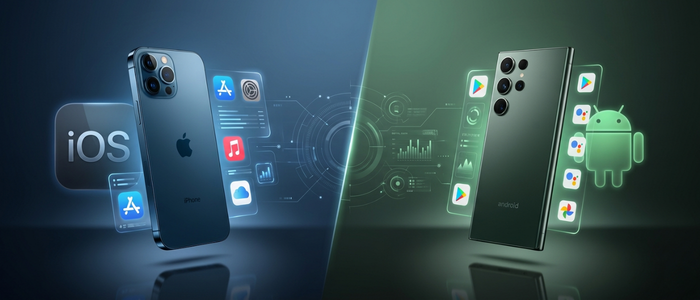
iPhone vs Android: The Complete 2026 Buying Guide
Olivia Hallisen
Jun 16,2026
One of the biggest decision-making areas for smartphone buyers is choosing between iPhone vs Android, and in 2026 the gap has become even more interesting. Both platforms have evolved significantly and now offer powerful performance, advanced cameras, AI features, and mature ecosystems. But the real question remains the same: which one is better for you?
This Smartphone Comparison guide covers everything you need to understand about Android Phones, how Apple’s ecosystem works, and why the Apple Vs Samsung rivalry continues to redefine what matters most in a mobile device. Whether you're upgrading your phone or buying your first premium smartphone, this guide will help you make a smarter choice.
The Core Difference Between iPhone and Android
At its simplest level, the iPhone vs Android debate comes down to ecosystem and flexibility. iOS is a closed system designed by Apple to work seamlessly across all Apple devices. Every iPhone is built to integrate smoothly with products like MacBooks, iPads, Apple Watches and AirPods.On the other hand, Android is an open-source system used by multiple brands such as Samsung, Google, OnePlus, Xiaomi, and others. This allows for much more customization and a wider variety of hardware options. This fundamental difference impacts everything from design and usability to pricing and long-term experience.
Performance and Speed
Thanks to tight hardware and software integration, iPhones have traditionally led in raw performance. Even mid-range iPhones often deliver smooth and consistent speed comparable to flagship devices.However, modern Android Phones have significantly closed the gap. With powerful processors, higher RAM, and advanced cooling systems, flagship Android devices now handle gaming, multitasking, and heavy apps with ease. In real-world usage, both platforms perform well. The difference is that iPhones tend to deliver long-term consistency, while Android offers more variation depending on price and brand.
Camera Comparison: Apple vs Samsung and Android Brands
Camera quality is one of the most important factors in any Smartphone Comparison. iPhones are known for natural color tones, stable video recording, and consistent results. Content creators often prefer iPhones because of smooth frame rates and reliable autofocus performance.In the Apple Vs Samsung competition, Android brands have pushed hardware innovation further. Many Android Phones now feature higher megapixel sensors, advanced zoom capabilities, and AI-enhanced photography modes.
Samsung flagship devices are especially known for highly detailed images and powerful zoom features, while Google Pixel devices are famous for computational photography.
Software Experience and Updates
Software experience plays a major role in the iPhone vs Android decision. iOS offers a clean, simple, and controlled environment. Updates are released simultaneously across all supported devices, ensuring strong long-term support and security.Android provides a more flexible experience. Users can customize themes, install third-party apps, and modify nearly every part of the system. However, update speed varies depending on the manufacturer. If you prefer simplicity and stability, iPhone is ideal. If you enjoy customization and control, Android Phones are a better fit.
Ecosystem and Connectivity
Apple has built one of the strongest ecosystems in the tech world. Devices like iPhone, MacBook, iPad, Apple Watch, and AirPods work seamlessly together, creating a smooth and connected experience.Android ecosystems are more open. Brands like Samsung also offer connected experiences across phones, tablets, and wearables, but integration varies across manufacturers. Overall, Apple still leads in ecosystem strength, especially for users who already own multiple Apple devices.
Battery Life and Charging
Battery performance has improved significantly on both platforms. Many Android Phones now offer larger batteries and extremely fast charging, often reaching full charge in under 30–40 minutes.iPhones rely more on software optimization than battery size. While charging speeds may be slower compared to Android, iOS efficiency ensures reliable all-day battery life. If fast charging matters most, Android has the advantage. If optimized stability matters more, iPhone performs better.
Pricing and Value for Money
Pricing is one of the biggest factors in Smartphone Buying Tips. iPhones are generally positioned in the premium segment, with limited budget options. However, they offer long software support and strong resale value.Android phones come in a wide price range from budget-friendly devices to ultra-premium flagships. This makes Android more accessible for different types of users. If you want affordability and variety, Android is better. If you want long-term value and premium experience, iPhone is stronger.
Gaming and Performance Usage
Both platforms perform very well for gaming in 2026. High-end Android Phones offer larger displays, higher refresh rates, and advanced cooling systems, making them excellent for gaming performance.iPhones provide highly optimized gaming experiences with stable frame rates and strong app optimization. In Best Mobile Phones comparisons, both platforms perform smoothly, but Android offers more hardware variety while iPhone offers consistency.
Security and Privacy
Apple strongly focuses on privacy and security. iOS includes strict app tracking policies and controlled permissions. Android has improved significantly in recent years, offering better privacy controls and security updates, but implementation can vary by manufacturer. For users prioritizing privacy, iPhone is often the preferred choice.Which One Should You Choose?
When comparing iPhone vs Android, the best choice depends on your personal needs.Choose iPhone if you want:
- Simple and smooth experience
- Long-term software updates
- Strong ecosystem integration
- High-quality video recording
Choose Android if you want:
- More customization options
- Wider price range
- Faster charging and larger batteries
- More hardware variety and innovation
Conclusion
The iPhone vs Android debate in 2026 is less about which is better overall and more about which is better for you personally. Both platforms are powerful, feature-rich, and capable of delivering excellent smartphone experiences.Apple continues to lead in ecosystem integration, software consistency, and privacy, while Android dominates in innovation, customization, and pricing flexibility. Brands like Samsung and Google have made the Smartphone Comparison more competitive than ever.
Ultimately, your decision should depend on your lifestyle, budget, and usage needs. Whether you choose Apple or Android, today’s Best Mobile Phones offer outstanding performance for almost every type of user.
FAQs
Q1. iPhone vs Android: Which is better in 2026?
Both are excellent. iPhone offers stability and ecosystem benefits, while Android provides customization and variety.Q2. What is the main difference between iPhone and Android?
iPhone uses a closed iOS system, while Android is open-source and more customizable.Q3. Are Android Phones cheaper than iPhones?
Yes, Android Phones are available in a wide price range, making them more affordable overall.Q4. Which is better for gaming: iPhone or Android?
Both perform well, but Android offers more hardware variety while iPhone offers better optimization.Q5. What should I check before buying a smartphone?
Consider performance, camera quality, battery life, software updates, and ecosystem compatibility using proper Smartphone Buying Tips.Recent Blogs