AI Gadgets That are Transforming Daily Life in 2026
Olivia Hallisen
Jun 16,2026
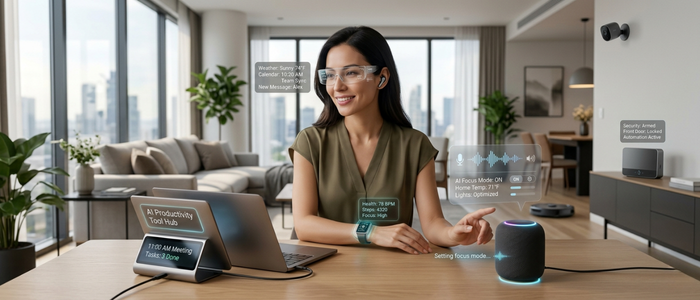
Artificial intelligence has moved out of the imagination stage and has become a part of our everyday lives. From smartphones and home assistants to wearable technology and smart appliances, AI Gadgets are transforming the way we live and interact with technology. In 2026, these devices are more advanced, accessible, and practical than ever before.
Smart AI Devices are not only improving convenience but also reshaping industries. Whether it is smart homes, healthcare, education, or entertainment, AI is driving a new era of efficiency and personalization. The concept of Future Gadgets is built on machine learning, where devices learn user behavior and automate daily tasks.
This guide explores how AI Technology Trends are reshaping modern life, along with the most promising innovations in AI Home Devices and Latest Tech Innovations in 2026.
Most Gadgets in Everyday Life Are Getting Smarter
One of the biggest changes in recent years is how AI Gadgets have evolved in daily use. Earlier, AI was limited to research labs and complex systems. Today, it is embedded in simple devices like smart speakers, wearable fitness trackers, robotic cleaners, and even kitchen appliances.These devices are designed to reduce human effort and improve efficiency. Instead of manually controlling every task, users now rely on intelligent systems that learn patterns and make decisions automatically.
For example, AI-powered assistants can schedule meetings, adjust home lighting, or recommend content based on user preferences. This level of automation is what makes Smart AI Devices so powerful in 2026.
AI-Based Home Devices That Control Smart Homes
One of the most impactful advancements in modern living is the rise of AI Home Devices. Smart homes have now moved beyond basic automation and use artificial intelligence to create fully adaptive environments.Smart Assistants
Most smart homes are centered around AI assistants. These devices control lights, appliances, entertainment systems, and security devices through voice or app commands. Over time, they learn user habits and automate routines such as morning wakeups, sleep schedules, and energy usage.Smart Security Systems
AI-powered security cameras and video doorbells can recognize faces, detect suspicious activity, and send real-time alerts. These systems offer more advanced monitoring and safety compared to traditional security setups.Smart Climate Control
AI thermostats adjust room temperature based on weather, time, and user behavior. This improves comfort while also helping reduce energy consumption. Together, these AI Home Devices are making homes smarter, safer, and more energy efficient.AI Technology Trends Shaping 2026
AI Technology Trends are evolving rapidly and influencing innovation across industries. As we move toward 2026, several key trends are shaping how AI is used in everyday gadgets.Hyper-Personalization
AI systems now analyze user behavior in real time to deliver highly personalized experiences. Music, shopping, and entertainment recommendations are tailored to individual preferences.Voice and Gesture Control
Modern devices support both voice commands and gesture-based controls, making interaction more natural and intuitive.Predictive Automation
Unlike earlier systems that only reacted to commands, modern AI can predict user needs. For example, smart devices can automatically adjust lighting or temperature when you arrive home.Edge AI Processing
Instead of relying entirely on cloud servers, many devices now process data locally. This improves speed, privacy, and reliability.Sustainable Smart Technology
New Smart AI Devices are designed to reduce environmental impact while maintaining high performance. These trends are shaping the future of how humans interact with technology.Future Gadgets Transforming Daily Life
The idea of Future Gadgets is no longer science fiction. Many of these devices already exist in early forms and are becoming mainstream in 2026.AI Wearables
Smartwatches and fitness bands now track health metrics in real time, detect abnormalities, and provide AI-based health suggestions.Smart Kitchen Devices
AI-powered ovens, refrigerators, and coffee machines can suggest recipes, monitor food freshness, and automate cooking processes.AI Cleaning Robots
Robotic vacuum cleaners and mops use advanced mapping systems and AI learning to clean homes efficiently with minimal human input.Smart Entertainment Systems
AI-powered TVs and audio systems learn user preferences and recommend personalized content. These innovations show how deeply Future Gadgets are integrated into everyday life.Latest Tech Innovations in AI Gadgets
The rise of Latest Tech Innovations in AI is making devices smarter, faster, and more efficient. One breakthrough is machine learning integration. Devices are no longer static; they continuously improve through user interaction.Another key innovation is multimodal AI, where devices can understand voice, text, images, and gestures simultaneously. This creates more natural interactions.
In addition, AI chips are becoming more powerful and energy-efficient, allowing even small devices to handle complex tasks smoothly. These advancements are expanding what AI Gadgets can achieve in real life.
Advantages of AI Gadgets in Daily Life
The growing popularity of Smart AI Devices is driven by their real-world benefits.Convenience
AI reduces manual effort by automating tasks such as scheduling, device control, and home management.Time Saving
By handling repetitive tasks, AI gives users more time to focus on important activities.Energy Efficiency
Smart systems optimize energy usage, reducing electricity costs and environmental impact.Better Decision Making
AI tools analyze data and provide useful suggestions to help users make smarter choices.Enhanced Security
AI-based monitoring systems detect unusual activity and send real-time alerts for improved safety.Challenges of AI Gadgets
While AI Gadgets offer many advantages, they also come with challenges. Privacy remains a major concern due to the collection of large amounts of user data. Security risks and dependency on internet connectivity are also important issues. However, advancements in encryption, edge computing, and data protection are helping reduce these risks.The Future of AI in Daily Life
AI Technology Trends suggest that the future will be even more intelligent and connected. AI will become less visible but more powerful, working quietly in the background to improve everyday life.We can expect:
- Fully autonomous smart homes
- Emotionally intelligent AI assistants
- Advanced healthcare monitoring systems
- Smarter transportation systems
- Highly adaptive learning devices
Conclusion
AI Gadgets are no longer luxury items they are becoming essential tools in modern life. From Smart AI Devices that automate homes to AI Home Devices that improve comfort and security, these innovations are reshaping how we live every day.With continuous growth in AI Technology Trends, powerful Future Gadgets, and breakthrough Latest Tech Innovations, 2026 marks a major milestone in the evolution of artificial intelligence in consumer technology. The future is clear: AI is not just changing technology it is changing life itself.
FAQs
Q1. What are AI Gadgets?
AI Gadgets are smart devices powered by artificial intelligence that can learn, adapt, and automate tasks to improve daily life.Q2. How do Smart AI Devices work?
Smart AI Devices use machine learning algorithms and sensors to understand user behavior and automate tasks like lighting, security, and entertainment.Q3. What are AI Home Devices used for?
AI Home Devices are used for home automation, including smart security systems, climate control, entertainment, and cleaning robots.Q4. What are the latest AI Technology Trends in 2026?
Key trends include hyper-personalization, predictive automation, edge AI processing, and multimodal interaction systems.Q5. Are AI Gadgets safe to use?
Yes, but users should enable privacy settings and choose devices from trusted brands with strong security standards.Recent Blogs