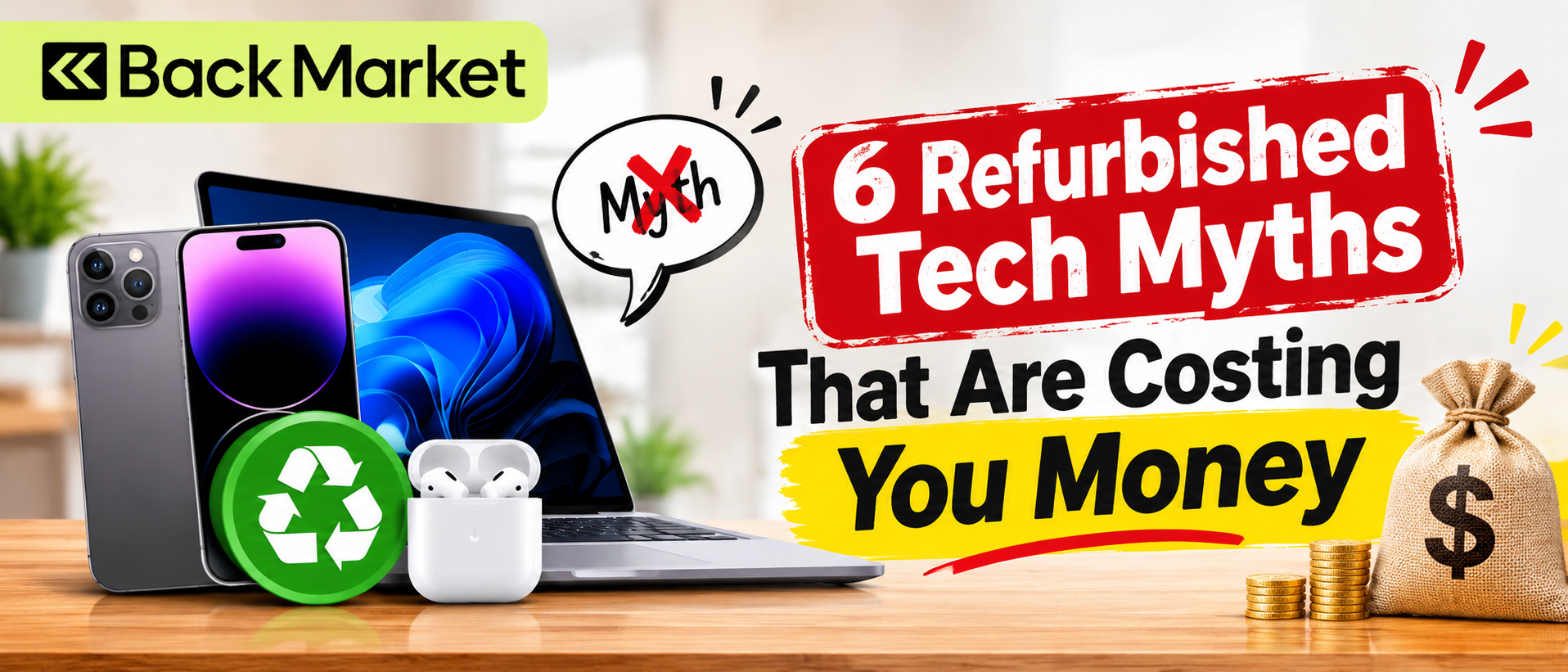
6 Refurbished Tech Myths That Are Costing You Money
Deepansha
Nov 03,2026
Introduction
Shop Smart With Back Market! 🛒Let me guess. You've been eyeing a laptop for weeks, the price tag made you wince, and then a friend said, "Just buy refurbished." And you hesitated. Maybe you pictured a scratched, sticky, half-dead machine from some dusty back room. Honestly? Same. I used to think that way too.
But here's the thing. Refurbished tech myths cost real money. Every time one of them wins, you pay extra for a sealed box you didn't need. In this post I'll walk through six of the most common tech myths, explain what's actually true, and give you a simple way to shop smarter. Some of it is obvious. Some of it, I think, will surprise you.
Want a trusted place to start looking? Back Market is a popular marketplace for certified refurbished devices, with tested products, warranty coverage and plenty of refurbished electronics deals worth a peek.
Why Refurbished Tech Myths Stick Around
It's not stupid to be suspicious. Years ago, "refurbished" really could mean a gamble. Sellers on random marketplaces would wipe a phone, wrap it in plastic, and call it a day. No testing. No returns nothing.The market has changed a lot since then, but our gut feelings haven't caught up. We still carry that old image around, and it quietly nudges us toward the shiny new option. The result? People overspend on phones, laptops and tablets they could've picked up for noticeably less, with almost the same experience.
So let's go through them. One by one.
Myth 1: "Refurbished Just Means Used and Dirty"
This is the big one. And it's wrong, or at least it's wrong when you buy from a decent seller.A secondhand device is something somebody used, then sold to you as is. Maybe it was wiped, maybe it wasn't. Refurbished is a different process entirely. The device gets collected, inspected, tested part by part, repaired if something's faulty, cleaned, reset to factory settings and then graded for how it looks. Screen, speakers, ports, camera, Wi-Fi, charging. All of it.
I once picked up a refurbished tablet from a small shop near my cousin's place (the kind with a bell on the door that jingles way too loudly). The box looked plain, nothing fancy. But the screen was spotless, the glass felt cool and smooth, and the thing smelled faintly of cleaning alcohol rather than somebody's pocket. I kept waiting for the catch. There wasn't one.
So no, refurbished doesn't mean grimy. It means checked. Big difference.
Myth 2: "Certified Refurbished Devices Break Faster"
Here's where people get tangled up. They assume a device with a past life must be closer to the end of it.But think about how electronics actually fail. A lot of faults show up early, in the first weeks of use, when a weak component gives out. Certified refurbished devices have often already been through that stage once. A previous owner returned it because of a tiny defect, a change of mind, or an upgrade, and the refurbisher tested it again before putting it back on the shelf. Sometimes the faulty part was simply replaced.
That's not a guarantee, obviously. Nothing is. A brand new laptop can arrive with a dead pixel, and a refurbished one can run happily for five years. What matters is the quality of the process and the reputation of whoever did the work. Certified refurbished devices from the manufacturer, or from a trusted program, usually follow stricter testing rules than a random listing does.
So is the risk higher? Slightly, maybe, in some cases. Is it high enough to justify paying a big premium every single time? Probably not.
Myth 3: "There's No Warranty, So You're On Your Own"
Nope. Well, not always, and that's the whole point of reading the fine print.Many reputable sellers include a warranty on refurbished products. Apple's refurbished store, for example, covers its products with a one-year warranty and swaps in a new battery and outer shell. Amazon Renewed backs its listings with a minimum guarantee period, and several dedicated refurbished marketplaces advertise warranties that run a year or more. The exact terms change, so always check the product page before you pay.
Here's my rule. If a listing doesn't mention a warranty, I assume there isn't one, and I walk away. Simple. If it does, I look for three things:
- How long the coverage lasts
- Who actually handles repairs (the seller, the maker, or some third party)
- Whether there's a return window if the device arrives faulty
Myth 4: "The Battery Will Be Dead in Months"
Batteries. Ugh. Everybody worries about the battery, and honestly, fair enough. It's the one part that wears out no matter what.But the myth assumes every refurbished battery is tired and ancient. Not true. Some programs replace batteries outright when health falls below a certain level. Others publish a minimum capacity, such as a stated percentage of original health, so you know what you're getting. Some sellers don't do either, and that's your cue to ask questions or shop elsewhere.
A quick tip if you're buying a phone: check the battery health listing before you pay. On many iPhones you can see it in Settings. On laptops, a battery report from your operating system tells you cycle count and capacity. It takes two minutes, and it can save you a lot of grumbling later.
And even in the worst case, a replacement battery costs a fraction of a new device. So a so-so battery is rarely a dealbreaker. I mean, really, compare a battery swap to a whole new flagship phone. It's not even close.
Myth 5: "Refurbished Electronics Deals Aren't Really Deals"
This one makes me a bit crazy. Some people assume that if something is cheaper, it must be cheaper for a bad reason. Refurbished electronics deals must be a trap, right?Not quite. The discount exists because the device was returned or previously owned, so it can't be sold as brand new. That's it. It's a pricing category, not a warning sign. Retailers and manufacturers move these units at lower prices to clear stock and keep customers happy.
Where deals get tricky is when the price looks too good. A flagship phone at half price from an unknown seller with no reviews? Slow down. Check the seller's rating, the return policy, the grade of the device and what's actually in the box. A genuine bargain usually sits somewhere in a believable range, often a noticeable chunk below new, not an impossible one.
Timing helps too. Festive sales in India, such as Diwali, bring serious discounts on refurbished listings across big platforms, and the same goes for Black Friday elsewhere. I've seen a decent laptop drop by a few thousand rupees just by waiting a week. Not a huge sum, but it adds up over a few gadgets.
So are refurbished electronics deals worth it? When you verify the seller and the warranty, usually yes.
Myth 6: "New Is Always Safer and Smarter"
New feels safe. The seal, the smell of fresh plastic, the clean unboxing video in your head. I get it.But "new" isn't automatically smarter, and sometimes it's the costlier mistake. A new phone loses a big share of its value in the first year. You pay full price for that drop. Buy a refurbished model that's a generation old, and somebody else has already absorbed most of the depreciation. Your money goes further.
There's an environmental side too, which I won't lecture you about, but it's real. Every device that gets a second life means fewer new devices manufactured, and fewer old ones sitting in drawers or heading to landfill. Nice bonus, even if it's not your main reason.
And think about what you actually need. Do you really require the latest chip to write emails, join video calls and scroll the news? Maybe you do. Maybe you don't. Be honest with yourself. Plenty of people pay for performances they never touch.
How to Spot Genuine Refurbished Electronics Deals
Okay, so you're (hopefully) a bit more open now. How do you actually buy well? Here's my checklist, kind of rough, but it works.First, buy certified refurbished devices whenever you can. Certification means a defined process, not just a seller's promise. Manufacturer programs and well-known marketplaces tend to be the safest starting points.
Second, read the grading. Terms like "excellent," "good" and "fair" usually describe cosmetic condition only, but check whether the seller says so. A scratched casing is fine for me. A dim, flickering screen is not.
Third, look at what's included. A charger, a cable, sometimes a case. Missing accessories can quietly eat your savings.
Fourth, compare the price against a new one, and also against a few other refurbished listings. If the gap against new is tiny, just buy new.
Fifth, check reviews that mention delivery, packaging and support, not only the product. A great device from a terrible seller is still a bad experience.
And finally, keep your invoice. Boring advice, I know. But when something goes wrong in month five, you'll be very glad you saved it.
These small habits matter more than any single brand name. Shopping smart is mostly about slowing down for ten minutes before you pay.
Final Thoughts
So, to wrap up. Refurbished tech myths feel convincing because they're based on a past that mostly doesn't exist anymore. Today, refurbished isn't synonymous with dirty, unreliable or unprotected. With certified refurbished devices, a clear warranty and a seller you can actually trust, you can get a very good gadget for a lot less.Does that mean every listing is perfect? Of course not. Do your homework, check the battery, read the return policy, and walk away from anything fishy. But don't let old tech myths drain your wallet either.
The next time you feel that pull toward a brand new box, pause and ask one honest question: do I really need this one, or do I just need it to work well? If it's the second, refurbished electronics deals might be sitting right there, waiting. Question the refurbished tech myths you've believed so far, and your next purchase could cost noticeably less.
And if you're ready to give it a go, Back Market is a great place to begin, with certified refurbished devices and refurbished electronics deals from vetted sellers.
Shop Smart With Back Market! 🛒
Frequently Asked Questions
1. Are certified refurbished devices as good as new ones?
In day to day use, often yes. Certified refurbished devices are tested, repaired where needed and reset before sale, and many come with a warranty. Small cosmetic marks may remain depending on the grade, and battery wear can differ, so check the product page for details.
2. Is it safe to buy refurbished electronics deals online?
It can be, as long as you choose a reputable seller. Look for a clear warranty, a return window, verified reviews and a detailed condition grade. If a price looks unbelievably low or the seller won't answer questions, skip it.
3. What should I check before buying a refurbished phone or laptop?
Check the warranty length, the return policy, the battery health, the cosmetic grade and what accessories come in the box. It's also smart to confirm the seller is authorized or well reviewed, and to keep your invoice safe for any future claim.
Recent Blogs